Understanding Your DEXA Scan: More Than Just a Number
When you receive your DEXA scan results, you might find yourself looking at a lot of numbers and terms. Among the most important for bone health is the T-score. Understanding what a good dexa scan t-score means is key to knowing the state of your bone density.
What Exactly Is a DEXA Scan?
A DEXA scan, short for Dual-energy X-ray Absorptiometry, is a safe, non-invasive imaging test that uses a very low dose of X-rays to measure bone mineral density (BMD) and body composition. It's considered the gold standard for diagnosing osteoporosis and assessing your risk of fractures. During the scan, you lie still on a table while a scanner arm passes over your body, measuring the density of your bones, typically in the hip, spine, and forearm.
Why Bone Health Matters
Your bones are living tissue, constantly being broken down and rebuilt. Strong bones provide structure, protect organs, anchor muscles, and store calcium. As we age, the rate of bone breakdown can sometimes outpace bone formation, leading to a decrease in bone density. This can make bones weaker and more susceptible to fractures, even from minor falls or bumps. Maintaining good bone health throughout life is crucial for mobility, independence, and overall quality of life.
Deciphering Your Bone Density Results
Understanding your DEXA scan results, particularly your T-score, is a vital step in managing your bone health.
Introducing the T-Score: Your Bone Density Benchmark
The T-score is a key measurement from your DEXA scan that compares your bone mineral density (BMD) to that of a healthy young adult of the same sex. It's expressed as a standard deviation, indicating how much your bone density deviates from the average peak bone density. A negative T-score means your bone density is lower than the reference, while a positive T-score (less common) means it's higher.
How Your T-Score Is Calculated
Your DEXA scan measures the amount of bone mineral in specific areas. This measurement is then compared to a statistical database of bone densities from healthy young adults. The difference is calculated, and this forms your T-score. It's essentially a statistical way to quantify how your bones stack up against what's considered optimal for peak bone health.
What Does Your T-Score Mean for Your Bone Health?
Interpreting your bone density t-score is crucial for understanding your bone health status.
The "Good" T-Score: Healthy Bones
A T-score of -1.0 or above is generally considered to indicate normal, healthy bone density. For example:
- +1.0 to -1.0: This range suggests your bone density is within the normal healthy range, similar to that of a young adult with peak bone mass. This is the ideal dexa scan t-score to aim for.
Regular monitoring, especially as you get older, can help ensure your bone density remains in this healthy range.
When T-Scores Suggest Osteopenia
If your T-score falls between -1.0 and -2.5, it indicates osteopenia. This means your bone density is lower than normal, but not yet at the level of osteoporosis. Osteopenia is a warning sign that your bones are starting to weaken, and it's an opportunity to take proactive steps to prevent further bone loss. Many people with osteopenia may not experience symptoms, which is why regular DEXA scans are so important.
Understanding an Osteoporosis T-Score
A T-score of -2.5 or lower signifies osteoporosis. This is a condition where bones have become significantly porous and fragile, making them much more prone to fractures. An osteoporosis t-score means your bone density is considerably lower than that of a healthy young adult. Early detection through a DEXA scan is vital, as it allows for timely management strategies to reduce fracture risk and maintain bone integrity.
Factors Influencing Your T-Score
Several factors can impact your bone density and, consequently, your T-score.
Age and Gender
Bone density naturally tends to decrease with age, particularly after the age of 30. Women, especially after menopause, are at a higher risk of bone loss due to a drop in oestrogen levels, which plays a protective role in bone health. However, men can also develop osteoporosis.
Lifestyle Choices and Bone Density
Your daily habits play a significant role in maintaining strong bones:
- Diet: A diet rich in calcium and vitamin D is essential. Calcium is the main mineral in bones, and vitamin D helps your body absorb calcium.
- Physical Activity: Weight-bearing exercises (like walking, jogging, dancing) and resistance training help stimulate bone formation and improve bone strength.
- Smoking and Alcohol: Smoking has been linked to lower bone density, and excessive alcohol consumption can also negatively impact bone health.
Other Considerations
Certain medical conditions (e.g., thyroid disorders, coeliac disease) and medications (e.g., some steroids) can also affect bone density. It's important to discuss your full medical history with your doctor when interpreting your DEXA scan results.
Beyond the T-Score: A Holistic View of Bone Health
While the T-score is a primary indicator, it's part of a broader picture.
The Z-Score: Another Piece of the Puzzle
In some cases, especially for pre-menopausal women, men under 50, and children, a Z-score is also reported. The Z-score compares your bone density to that of people your own age, sex, and ethnic background. A Z-score significantly below 0 (typically -2.0 or lower) can indicate that something other than normal ageing might be contributing to bone loss, prompting further investigation.
The Importance of Longitudinal Tracking
Bone health isn't static; it changes over time. A single DEXA scan provides a snapshot, but tracking your dexa scan t-score over multiple scans offers invaluable insights into trends in your bone density. This longitudinal data helps you and your healthcare provider understand if your bone density is stable, improving, or declining, allowing for more informed decisions about your bone health journey.
Tracking Your Bone Health Journey with dexa.report
Understanding your DEXA scan results is the first step towards better bone health. But what comes next? Tracking your progress!
Visualising Your dexa scan t-score Over Time
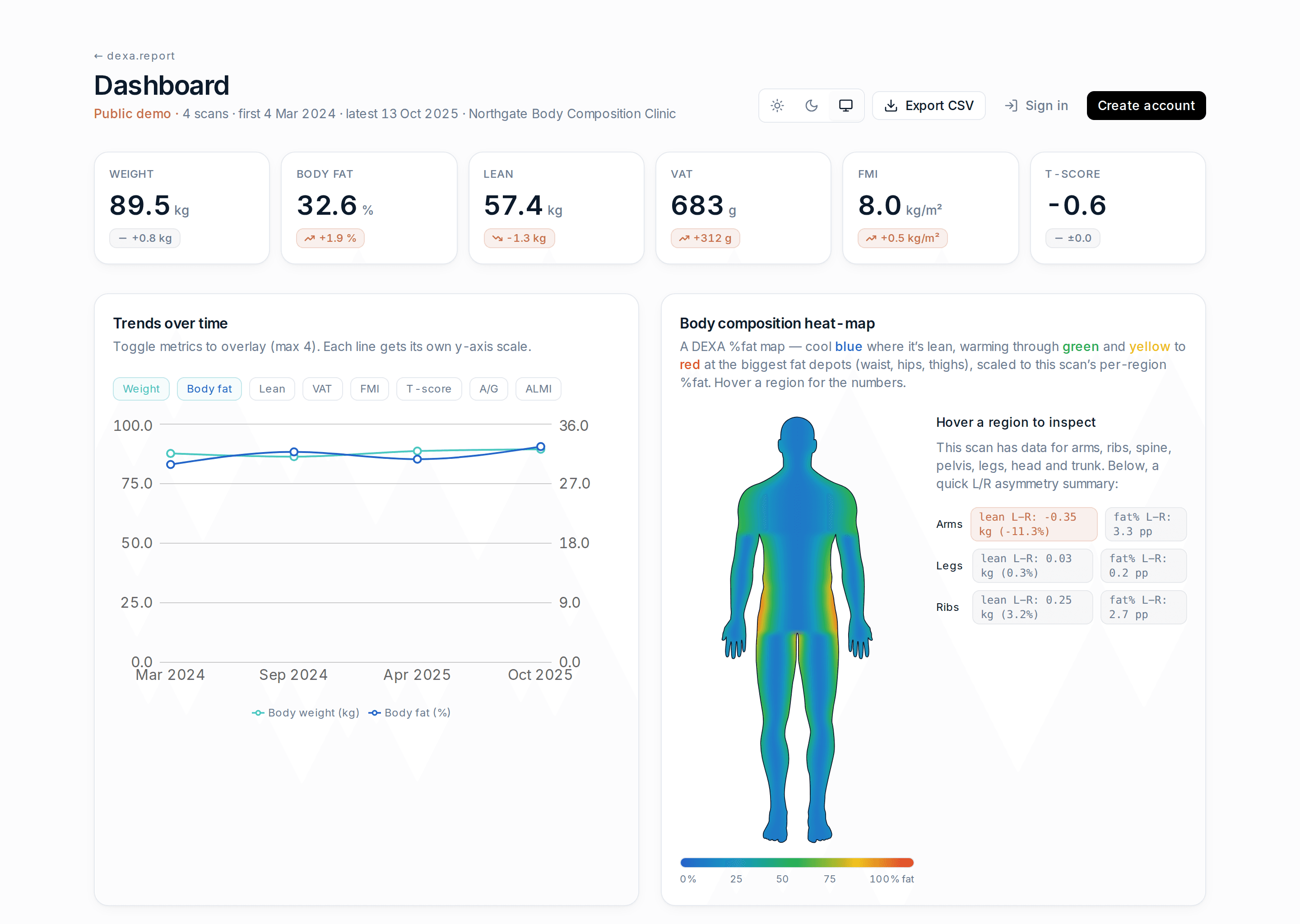
dexa.report makes it easy to take control of your bone health data. By uploading your DEXA scan PDFs, you can visually track your T-score and other bone density metrics over time. This allows you to see trends, understand the impact of lifestyle changes, and have clearer conversations with your healthcare provider about your bone health journey. Drop your scan, parse your data, and start tracking your bone health with dexa.report today.