What is a DEXA Scan?
A DEXA scan, short for Dual-Energy X-ray Absorptiometry, is a highly accurate and non-invasive medical imaging test that measures your body composition and bone mineral density. Unlike traditional scales that only tell you your total weight, a dexa scan provides a detailed breakdown of what your body is made of: bone mass, lean muscle mass, and fat mass.
Originally developed to assess bone health and diagnose conditions like osteoporosis, the dexa scan has become increasingly popular in fitness and health circles for its precision in measuring body composition. It offers a more complete picture of your health than methods like BMI (Body Mass Index) or bioelectrical impedance, which can be less accurate.
The Science Behind DEXA: How Does DEXA Work?
Understanding how a dexa scan works can help demystify the process and highlight its accuracy.
Dual-Energy X-ray Absorptiometry Explained
The core principle behind Dual-Energy X-ray Absorptiometry is quite clever. The machine emits two distinct low-dose X-ray beams, each at a different energy level, as they pass through your body. Different tissues absorb these X-ray energies at different rates. For example, bone absorbs more X-rays than fat tissue, and lean muscle tissue absorbs somewhere in between.
A detector on the other side of your body measures how much of each X-ray beam passes through. By comparing the absorption rates of the two energy levels, the dexa scan machine's sophisticated software can precisely differentiate between bone, lean mass (muscle, organs, water), and fat mass in various parts of your body. This dual-energy approach is what makes the technology so accurate and reliable for body composition analysis.
What Happens During a DEXA Scan?
A dexa scan is a straightforward and painless procedure. When you arrive for your scan, you'll typically be asked to remove any metal objects like jewellery, zips, or buttons, as these can interfere with the X-ray beams. You'll then lie comfortably on your back on a padded table.
A C-arm, which is the part of the machine that contains the X-ray source and detector, will slowly pass over your body. You'll need to remain still during this time, usually for about 5 to 10 minutes, to ensure clear images. The X-ray exposure is very low, comparable to the amount of natural background radiation you'd encounter in a few days. The technician will typically be in an adjacent room, monitoring the scan and able to communicate with you throughout.
What Can a DEXA Scan Tell You?
The insights gained from a dexa scan go far beyond what a bathroom scale can offer.
Beyond Body Weight: Understanding Body Composition
One of the primary benefits of a dexa scan is its ability to provide a detailed breakdown of your body composition. You'll receive precise measurements for:
- Total Body Fat Percentage: This is the proportion of your total body weight that is fat. It's a much more meaningful indicator of health than just your weight, as two people of the same weight can have very different body fat percentages.
- Regional Body Fat Distribution: The scan can show where fat is stored in your body (e.g., arms, legs, trunk, android/gynoid regions), which can be useful for understanding health risks or tracking changes in specific areas.
- Lean Mass: This includes your muscles, organs, and water. Tracking lean mass is crucial for athletes, those trying to build muscle, or individuals concerned about muscle loss as they age.
- Visceral Fat: This is a particularly important metric. Visceral fat is the fat stored deep within your abdominal cavity, surrounding your organs. High levels of visceral fat are associated with various health concerns, making its measurement a valuable insight.
Understanding these components helps you see the full picture of your physical makeup, allowing for more targeted health and fitness strategies.
Bone Mineral Density: A Key Indicator
Beyond body composition, the dexa scan is the gold standard for measuring bone mineral density (BMD). This measurement is crucial for:
- Assessing Bone Strength: It indicates the density of minerals (like calcium) in your bones, which directly relates to their strength and resistance to fractures.
- Diagnosing Osteoporosis and Osteopenia: These conditions involve a decrease in bone density, making bones brittle and more prone to breaks. Early detection through a dexa scan allows for timely management.
- Monitoring Treatment Effectiveness: For individuals undergoing treatment for bone density issues, regular dexa scans can track the effectiveness of interventions over time.
Who Might Benefit from a DEXA Scan?
A dexa scan can be a valuable tool for a wide range of individuals, from fitness enthusiasts to those focused on long-term health.
Tracking Your Fitness Journey
If you're serious about your fitness goals, a dexa scan offers unparalleled insight:
- Precise Progress Tracking: See exactly how your body fat percentage and lean muscle mass are changing over time, which can be far more motivating and accurate than just watching the scales.
- Optimising Training and Nutrition: Understand if your current exercise and dietary approaches are effectively reducing fat, building muscle, or both.
- Setting Realistic Goals: Gain a clear baseline to set informed and achievable targets for body recomposition.
Monitoring Bone Health
For others, the focus might be more on bone health:
- Individuals at Risk of Osteoporosis: This includes post-menopausal women, older adults, those with a family history of osteoporosis, or individuals with certain medical conditions or on specific medications.
- Monitoring Age-Related Changes: As we age, bone density can naturally decline. Regular dexa scans can help monitor this and identify any significant drops early.
- Athletes with High-Impact Training: While exercise generally strengthens bones, some athletes may benefit from monitoring, especially if they have concerns or specific dietary needs.
Preparing for Your DEXA Scan
Preparing for a dexa scan is generally simple, but a few considerations can help ensure accurate results:
- Clothing: Wear comfortable, loose-fitting clothing without metal zips, buttons, or embellishments. You may be asked to change into a gown if your clothes contain metal.
- Medications/Supplements: Inform the clinic if you're taking any calcium supplements. You might be advised to avoid them for 24 hours before the scan, though this varies by clinic.
- Food and Drink: Usually, there are no specific dietary restrictions. However, some clinics might recommend avoiding heavy meals or excessive fluid intake just before the scan.
- Recent Scans: If you've had another medical imaging scan involving contrast dye (like a CT scan with contrast or a barium study) recently, inform the clinic. You might need to wait a certain period before your dexa scan.
- Pregnancy: If there's any possibility of pregnancy, inform the clinic immediately, as DEXA scans are generally not performed on pregnant individuals.
Understanding Your DEXA Scan Results
Once your dexa scan is complete, you'll receive a report detailing your body composition and bone density. This report typically includes:
- T-score and Z-score for Bone Density: These are standard scores used to compare your bone density to that of a healthy young adult (T-score) and people of your same age and sex (Z-score). Your doctor will interpret these scores to assess your bone health.
- Body Fat Percentage: Often broken down by total body and specific regions.
- Lean Mass: Also detailed by total body and regions.
- Visceral Fat Mass: A specific measurement of this important fat type.
While the report provides a wealth of data, it's always best to discuss your results with a healthcare professional or a qualified fitness expert. They can help you understand what the numbers mean for your individual health and goals, and how they compare to typical healthy ranges.
Tracking Your Progress with dexa.report
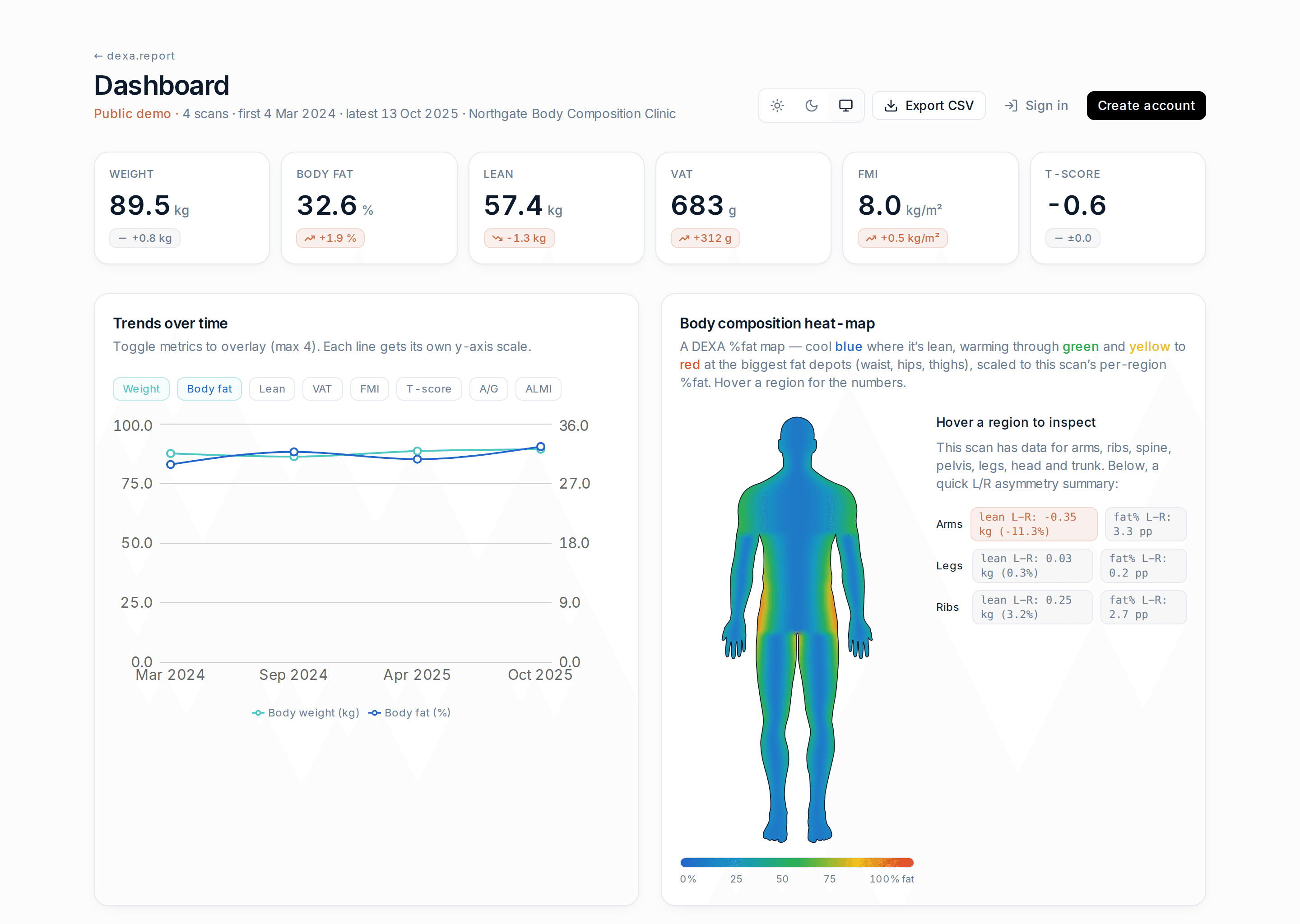
Getting a dexa scan is an excellent step towards understanding your body better. But the real power comes from tracking these metrics over time. dexa.report makes this incredibly easy. You can simply upload your DEXA-scan PDF, and our app will parse all your key body-composition metrics - like body fat percentage, lean mass, bone density, and visceral fat - turning your static PDFs into an interactive, longitudinal dashboard. This allows you to visually track your progress across multiple scans, helping you stay informed and motivated on your health journey.
Ready to see your progress unfold? Upload your DEXA scan to dexa.report today and start tracking your body composition with precision.